
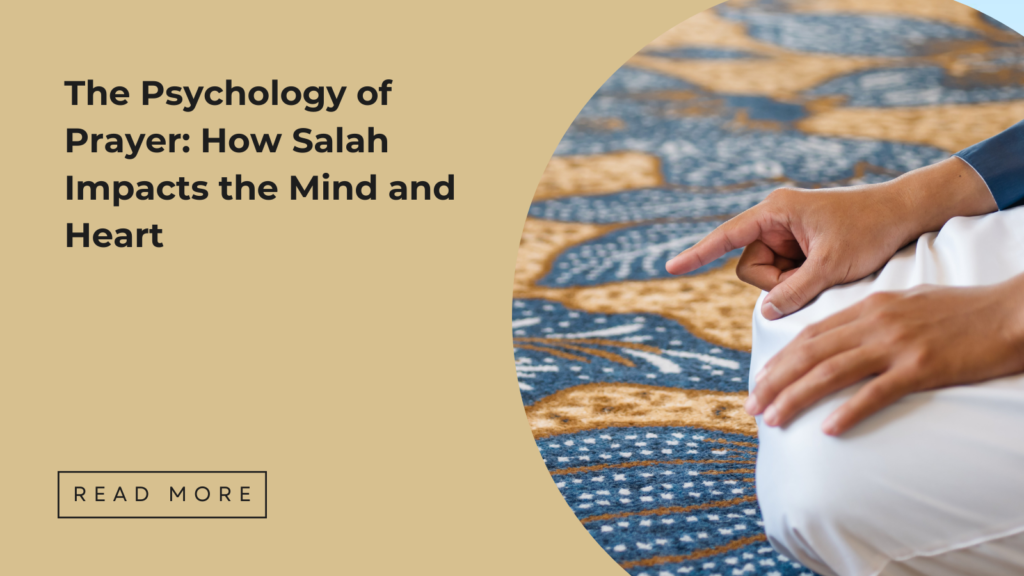
Founded by Elzahraa Hassane, Sakeena Institute is dedicated to exploring the powerful connection between faith, spirituality, and emotional well-being. Many Muslims experience comfort, clarity, and resilience through daily prayer, and modern research increasingly supports what believers have known for centuries: the psychology of prayer salah can profoundly influence mental health.
Within the structure of the five daily prayers, Muslims experience reflection, mindfulness, and spiritual grounding. These practices contribute to the mental benefits of salah, including stress reduction, emotional balance, and improved focus. Through spiritual devotion and mindful reflection, prayer becomes not only a religious obligation but also a powerful source of psychological healing and personal growth.
In this article, we explore how the psychology of prayer salah connects faith and mental wellness, highlighting both Islamic teachings and insights from modern psychology.
Psychology of Prayer Salah – Understanding the Mental Benefits of Salah
The psychology of prayer salah refers to how Islamic prayer influences emotional regulation, mental clarity, and spiritual well-being. Salah is performed five times daily, creating a structured rhythm that encourages believers to pause, reflect, and reconnect with Allah.
This routine provides several mental benefits of salah, including:
- Creating regular moments of reflection throughout the day
- Reducing stress by shifting focus away from worldly worries
- Strengthening spiritual identity and purpose
- Encouraging mindfulness and emotional balance
From a psychological perspective, structured spiritual practices can improve emotional resilience. Studies on meditation and prayer suggest that regular spiritual rituals can reduce anxiety, enhance concentration, and promote overall mental well-being.
Prayer also nurtures a sense of surrender and trust in Allah, helping believers release worries and accept life’s challenges with patience.
Why Spiritual Practices Support Mental Health
Spiritual traditions around the world have long emphasized the healing power of faith. Research in psychology shows that religious practices often support emotional resilience and mental stability.
Faith practices are associated with:
- Reduced anxiety through spiritual reassurance
- A stronger sense of purpose and meaning in life
- Emotional stability through reflection and prayer
- Improved mental clarity through mindfulness and meditation
In Islam, prayer is deeply connected to emotional and psychological well-being. The concept of islamic prayer mental health highlights how faith practices nurture both spiritual growth and mental resilience.
The Qur’an emphasizes the calming effect of remembrance of Allah:
“Verily, in the remembrance of Allah do hearts find rest.” (Qur’an 13:28)
This verse beautifully illustrates the connection between spiritual remembrance and emotional tranquility.
The Psychological Benefits of Prayer in Islam
The psychological benefits of prayer islam are rooted in both spiritual wisdom and psychological principles. Salah encourages believers to slow down, focus inward, and reconnect with their purpose.
Some key benefits include:
Emotional Discipline
Prayer teaches patience and emotional regulation. Through daily worship, believers learn to manage stress and maintain composure even during challenging times.
Self-Awareness
Prayer provides moments of reflection that encourage individuals to examine their intentions, behaviors, and thoughts. This self-awareness is an important element of personal growth.
Daily Reflection
Each prayer acts as a pause during the day, allowing believers to reset mentally and spiritually. These reflective pauses help prevent emotional overwhelm and promote inner calm.
Consistent prayer routines have been shown to improve mood and psychological resilience. By strengthening spiritual identity and providing moments of stillness, salah supports both emotional and mental health.
How Salah Affects the Brain
Understanding how salah affects the brain helps bridge the gap between faith and neuroscience. While Islamic prayer is primarily a spiritual practice, research on meditation and prayer reveals fascinating neurological benefits.
Studies in neuroscience and psychology suggest that regular prayer and meditation can influence the brain in several ways.
Reduced Cortisol Levels
Prayer can help reduce cortisol, the hormone associated with stress. Lower cortisol levels contribute to a calmer mental state and reduced anxiety.
Improved Emotional Regulation
Mindful spiritual practices activate areas of the brain responsible for emotional control and empathy. This supports greater patience and emotional balance.
Increased Focus and Calmness
The repetitive movements and recitations in prayer help calm the nervous system, improving focus and concentration.
Activation of Gratitude and Compassion
Research has shown that spiritual reflection can activate brain regions associated with gratitude and empathy, strengthening positive emotional experiences.
These neurological effects help explain why prayer improves mental health, as spiritual practices provide a natural pathway to emotional balance and psychological resilience.
Spiritual Psychology of Salah and Inner Peace
The spiritual psychology of salah focuses on how prayer nurtures inner peace by strengthening the believer’s relationship with Allah.
Several spiritual elements contribute to this sense of tranquility.
Humility Before Allah
Standing in prayer reminds believers of their dependence on Allah, encouraging humility and reducing ego-driven stress.
Gratitude and Reflection
Reciting verses from the Qur’an encourages reflection on blessings and divine mercy. Gratitude is widely recognized in psychology as a powerful contributor to emotional well-being.
Surrendering Worries Through Faith
Prayer allows believers to release worries and place their trust in Allah’s wisdom. This act of surrender can significantly reduce anxiety and emotional tension.
Together, these elements highlight the profound emotional benefits of salah, including greater calmness, spiritual reassurance, and emotional stability.
Mindfulness in Salah – Islamic Meditation Through Prayer
Many psychologists compare prayer to mindfulness or meditation practices. In Islam, salah naturally incorporates mindfulness in salah, making it a powerful spiritual and psychological practice.
Mindfulness in prayer includes:
Focus During Recitation
When reciting Qur’anic verses, believers concentrate on the meaning and message, strengthening awareness and spiritual presence.
Controlled Movement and Breathing
The physical movements of prayer — standing, bowing, and prostrating — encourage controlled breathing and calm the nervous system.
Intentional Reflection
Prayer encourages believers to reflect on Allah’s guidance and their own personal growth.
Because of these elements, scholars often describe prayer as a form of islam and meditation prayer, where spiritual devotion and mindfulness work together to calm the mind.
This concept is also known as islamic mindfulness prayer, where the believer focuses entirely on the present moment and spiritual connection.
Emotional Benefits of Salah and Stress Relief
One of the most powerful aspects of prayer is its ability to provide emotional relief during stressful moments. The emotional benefits of salah include comfort, patience, and resilience.
Salah Stress Relief
Prayer creates a structured pause during the day, allowing individuals to step away from stress and reconnect with their spiritual foundation.
Emotional Grounding
During difficult times, prayer offers a moment of calm reflection and reassurance that challenges are temporary.
Increased Patience and Resilience
Regular prayer strengthens patience (sabr), helping believers approach life’s struggles with greater emotional strength.
The five daily prayers also serve as regular emotional reset points, helping believers process emotions and maintain balance throughout the day.
Why Prayer Improves Mental Health
There are several reasons why prayer improves mental health, especially within the Islamic framework.
Spiritual Connection
Prayer strengthens the believer’s relationship with Allah, creating a sense of comfort, protection, and spiritual support.
Structured Routine
The daily prayer schedule provides stability and rhythm, which psychologists recognize as beneficial for mental health.
Self-Reflection
Prayer encourages believers to reflect on their actions, intentions, and spiritual goals.
Community Belonging
Congregational prayer fosters a sense of community and shared purpose, reducing feelings of isolation.
Institutions like Sakeena Institute emphasize the importance of combining spiritual guidance with mental health awareness, helping individuals develop holistic well-being through faith and reflection.
By integrating spirituality with psychological insight, believers can experience deeper emotional balance and personal growth.
Final Thoughts
The psychology of prayer salah demonstrates how deeply interconnected spirituality and mental health can be. Through mindfulness, reflection, and devotion, the mental benefits of salah extend far beyond religious practice, offering emotional balance, resilience, and inner peace.
By approaching prayer with mindfulness and sincerity, believers can experience profound psychological benefits while strengthening their relationship with Allah.
If you wish to deepen your understanding of Islamic spirituality and emotional well-being, consider exploring educational resources, counseling services, or community programs that support both faith and mental health.
FAQ
What Are the Psychological Benefits of Salah?
The psychological benefits of salah include improved emotional stability, increased mindfulness, reduced stress, and greater mental clarity. Prayer encourages reflection and strengthens resilience during difficult times.
How Does Salah Affect the Brain?
Research suggests that prayer and meditation can reduce stress hormones like cortisol while activating brain areas related to emotional regulation, empathy, and calmness.
Can Salah Help Reduce Stress and Anxiety?
Yes. Regular prayer provides salah stress relief by encouraging spiritual reflection, slowing breathing, and helping believers release worries through faith and trust in Allah.
Is Salah Similar to Meditation or Mindfulness?
Salah shares similarities with meditation practices because it includes focused attention, controlled movement, and reflection. This form of islamic mindfulness prayer promotes calmness and mental clarity.
Why Is Prayer Important for Mental Health in Islam?
Prayer strengthens spiritual connection, encourages gratitude and reflection, and creates a structured routine that supports islamic prayer mental health and emotional well-being.