
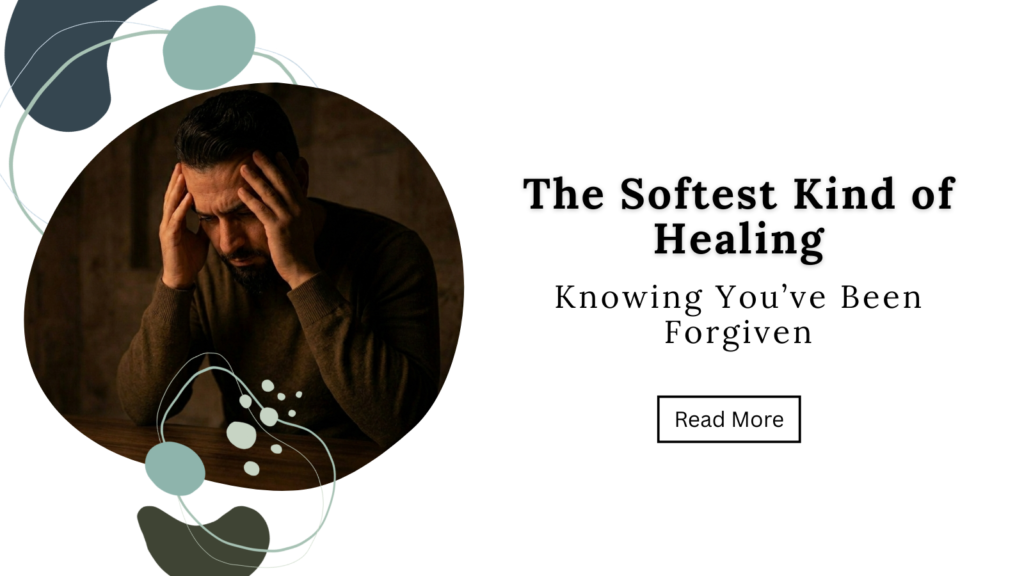
There comes a point where you need to take a step back.
The verses on guilt and Allah’s mercy are many. There are pages upon pages where Allah soothes the believers and tells them to never, ever, under any circumstances, feel like their sin is greater than His mercy. No matter how big the sin and no matter how repetitive it is.
And perhaps one of the things that is very touching about the Quran is its palpable sensitivity to how believers feel after they sin.
It’s truly mind blowing just how accurate these descriptions are.
وعلى الثلاثة الذين خلفوا حتى إذا ضاقت عليهم الأرض بما رحبت وضاقت عليهم أنفسهم وظنوا أن لا ملجأ من الله إلا إليه
“And [He also forgave] the three who were left behind, until when the earth closed in on them in spite of its vastness, and their souls felt straitened, and they were certain that there is no refuge from Allah except in Him.”
(Surah Al-Tawbah 9:118)
The description is mind blowing. The way in which Allah captured that…feeling is incredible because it’s so precise. This is exactly how we feel. When we slip up or make a mistake, it’s like everything is just so tight. Our chest, the whole world as we know it. There is suddenly not enough room to breathe or move or even think.
What’s even more beautiful is the continuation of the ayah:
ثم تاب عليهم ليتوبوا إن الله هو التواب الرحيم
“Then He turned to them so they could repent. Indeed, Allah is the Accepting of repentance, the Most Merciful.”
(Surah Al-Tawbah 9:118)
Allah knows exactly what they needed to hear at this very moment. What they needed to feel.
And so, when you make a mistake, and the incessant overpowering thoughts of guilt simply won’t stop, it’s important to always remind yourself of verses like these.
And when you have repented, and tried to fix your mistake, whatever outcome comes after that is simply no longer something you need to kill yourself over.
From an Islamic psychology perspective, this is deeply aligned with how the heart (qalb) is meant to function. Healthy guilt in Islam is not meant to paralyze you, but to move you. It nudges you towards tawbah and repair. But once that return has happened, lingering in guilt actually contradicts trust in Allah’s mercy. It subtly shifts from humility into a form of hopelessness.
Modern psychology speaks about rumination, which is the cycle of replaying mistakes over and over until they consume you. But the Quran interrupts that cycle. It doesn’t deny the mistake; it reframes it. It gives it a purpose, a path forward, and most importantly, an ending:
“ثم تاب عليهم ليتوبوا” is not just forgiveness…it is closure.
It is Allah gently teaching the believer: you are allowed to move on after you’ve sincerely repented. He, with His mercy, encourages us to be strong and not let those thoughts overpower us and to always remember that He accepts our repentance.
So yes, even if you may have made a mistake. A big one at that.
And even if you may have repeated that mistake. A lot of times at that.
It’s important to always remember that Allah’s mercy is bigger than those mistakes.
Surat Al-Imran touches upon this concept. After the believers left their post, despite the prophet (PBUH) telling them not to, this resulted in many casualties because of that one slip up.
And the absolute mercy and love Allah shows them after they slipped up is so healing. Because you read these verses of Allah reminding them that He is the One who gives life and takes life, He is the One whom all outcomes are within his control, and He is the One who has forgiven them…and you think to yourself, what a mercy this is.
To be a Muslim and to have Allah as our lord.
Can you imagine how horrified and guilty they felt seeing the aftereffects of their slip up?
And can you imagine how relieved they felt, hearing and digesting Allah’s words after that mistake?
They saw those casualties with their own two eyes, and Allah made them see those very same people who passed away as happy and joyful with their Lord, soothing their guilty conscience.
فرحين بما آتاهم الله من فضله ويستبشرون بالذين لم يلحقوا بهم من خلفهم ألا خوف عليهم ولا هم يحزنون
“Rejoicing in what Allah has bestowed upon them of His bounty, and they receive good tidings about those [to be martyred] after them who have not yet joined them—that there will be no fear concerning them, nor will they grieve.”
(Surah Al-Imran 3:170)
And maybe that is the quiet mercy we forget. That even when we cannot forgive ourselves, Allah already has.
This makes us, as muslims, emotionally resilient. Instead of allowing the chains of despair to prevent us from moving forward, we have our heads held high and backs straight.
Islam encourages us to fall, and get back up again. And fall, and get back up again.
To never give up and keep going, and to never allow that one mistake to define us. What defines us is what we do after that mistake, not the mistake itself.
And even more than that, Allah does not expect a life free of mistakes from us. In fact, He tells us that our slip-ups are part of the very fabric of being human…because it opens the door back to Him. The point was never perfection, it was always about the return.
قال رسول الله ﷺ: والذي نفسي بيده، لو لم تُذنبوا لذهب الله بكم، ولجاء بقومٍ يُذنبون فيستغفرون الله فيغفر لهم
The Prophet ﷺ said: “By Him in Whose Hand is my soul, if you did not sin, Allah would replace you with a people who would sin and then seek forgiveness from Allah, and He would forgive them.”
(Narrated by Abu Huraira, reported in Sahih Muslim)
Islam talked about how to process these emotions of heavy guilt long before modern psychology caught up.
Guilt in Islam is not left wandering aimlessly inside the person. It is given a direction. It is immediately tied to awareness, responsibility, and then movement forward. Not stagnation. The moment a believer feels that heaviness, the path is already laid out: acknowledge the mistake, turn back to Allah, make amends where possible, and then continue walking forward without self-destruction.
That is actually the kind of peace many people spend their lives searching for.
Not in never falling, but in always knowing where to return, and to Whom they can turn back to, every single time they do.