
An identity crisis among Muslim youth is becoming increasingly common in today’s fast-changing world. Many young Muslims struggle to balance faith, culture, family expectations, and modern societal pressures. Adolescence and early adulthood are already critical stages for identity formation, but when religious, cultural, and social influences collide, confusion can deepen. Understanding this struggle is the first step toward healing and clarity.
Identity development is a natural psychological process. According to developmental psychology research, youth form their sense of self by exploring beliefs, values, roles, and future goals. For Muslim youth, this journey often includes additional layers of spiritual responsibility, cultural expectations, and sometimes external stereotypes.
Understanding Identity Crisis Among Muslim Youth
An identity crisis among Muslim youth refers to confusion or internal conflict about personal beliefs, religious commitment, cultural belonging, and social roles. It can show up as questioning faith, distancing from community, or feeling disconnected from both Islamic and Western identities.
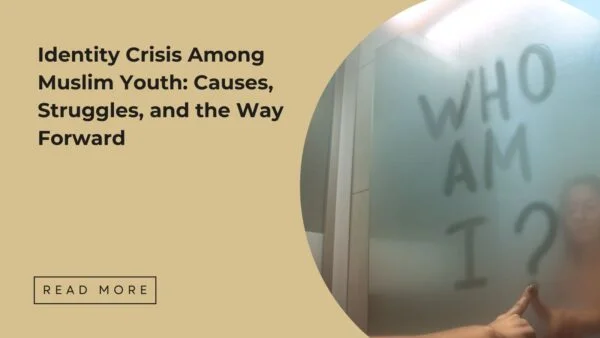
Adolescence and early adulthood are sensitive stages because the brain is still developing decision-making and emotional regulation skills. During this period, young people naturally ask: Who am I? What do I believe? Where do I belong?
Internal factors may include:
- Doubts about faith
- Emotional stress
- Personal insecurities
External factors may include:
- Islamophobia or discrimination
- Cultural clashes at home
- Peer pressure
- Social media influence
These overlapping pressures create unique Muslim youth identity challenges that require understanding rather than judgment.
Muslim Youth Identity Challenges in a Modern World
Today’s globalized world amplifies Muslim youth identity challenges. Social media constantly presents competing lifestyles, belief systems, and definitions of success. Young Muslims may feel torn between maintaining Islamic values and fitting into mainstream society.
One major issue is cultural identity Muslim youth conflict. Many young Muslims growing up in Western countries experience an “East vs West” dynamic. At home, they may be encouraged to follow traditional cultural practices. Outside, they are exposed to secular norms that may contradict those values.
This tension can create identity confusion young Muslims struggle with daily:
- Should I prioritize religious modesty or social acceptance?
- Can I fully integrate into society without compromising faith?
- Am I “too religious” for my peers or “not religious enough” for my family?
Balancing religious values with secular environments requires emotional maturity and strong support systems.
Identity Crisis Islamic Perspective: What Islam Says About Identity
From an identity crisis Islamic perspective, identity is rooted in submission to Allah and recognition of one’s purpose. Islam provides a stable framework for self-understanding through Tawheed (belief in the Oneness of Allah) and the concept of Fitrah (natural disposition).
The Quran reminds believers that human beings are created with dignity and purpose. This foundation protects against existential confusion. Islam and identity development are deeply interconnected because faith shapes moral values, behavior, and life direction.
The Prophet Muhammad (peace be upon him) emphasized balance engaging with society while maintaining spiritual grounding. Tawheed anchors identity by giving youth clarity about who they are first and foremost: servants of Allah.
When young Muslims internalize this foundation, external pressures become easier to navigate.
Muslim Youth Self Identity Struggle Between Culture and Faith
A common source of Muslim youth self identity struggle is confusion between religion and culture. Sometimes cultural traditions are mistakenly presented as Islamic obligations. This can lead to frustration and rebellion.
In multicultural societies, youth identity issues Islam often revolve around:
- Marriage expectations
- Career choices
- Gender roles
- Social boundaries
Family expectations may conflict with personal aspirations. For example, a young Muslim may want to pursue creative arts while family members prefer a traditional profession.
This internal tension can cause:
- Anxiety
- Low self-esteem
- Guilt
- Emotional withdrawal
Understanding the difference between Islamic principles and cultural customs helps reduce unnecessary conflict.
The Psychological Impact of Identity Confusion in Young Muslims
Prolonged identity confusion young Muslims experience can impact mental health. Research in youth development shows that unclear identity formation is linked to depression, anxiety, and social isolation.
Emotional effects may include:
- Feeling like an outsider
- Belongingness crisis
- Fear of judgment
- Spiritual guilt
Academically, students may lose motivation. Socially, they may isolate themselves from both Muslim and non-Muslim peers.
The internal conflict between personal dreams and religious commitment can create cognitive dissonance. Without proper guidance, this struggle may weaken both faith and confidence.
Addressing these issues requires compassionate, culturally sensitive support.
Cultural Identity and Faith Integration
A healthy model of cultural identity Muslim youth development integrates faith with modern life rather than forcing a choice between them.
Islam and identity development can coexist with:
- Higher education
- Professional careers
- Civic engagement
- Creative expression
Young Muslims need positive role models who demonstrate balance individuals who are both spiritually grounded and socially engaged.
Support for Muslim Youth Identity – Practical Steps
Providing support for Muslim youth identity development requires community effort.
- Mentorship
Mentors who understand both Islamic values and modern realities can guide youth through confusion. - Islamic Counseling
Faith-based counseling helps address emotional struggles while reinforcing spiritual grounding. - Family Communication
Open, non-judgmental conversations build trust and reduce secrecy. - Youth Programs and Workshops
Faith-based workshops create safe environments for discussion and growth. - Safe Spaces
Young Muslims need spaces where questions are welcomed without shame.
When these systems are in place, an identity crisis among Muslim youth becomes an opportunity for growth rather than a long-term struggle.
How Sakeena Institute Supports Muslim Youth
At Sakeena Institute, we understand the emotional and spiritual complexities behind an identity crisis among Muslim youth. Our approach combines Islamic psychology with evidence-based counseling methods.
We offer:
- Faith-centered counseling services
- Youth development programs
- Islamic psychology resources
- Workshops addressing Muslim youth identity challenges
Our mission is to provide compassionate, judgment-free guidance that helps young Muslims rediscover clarity, confidence, and spiritual balance.
If you or your child is experiencing a Muslim youth self identity struggle, professional support can make a transformative difference.
Conclusion
An identity crisis among Muslim youth is not a sign of weak faith is often a natural response to complex social and cultural pressures. With proper understanding, mentorship, and faith centered guidance, young Muslims can transform confusion into clarity.
By strengthening Islam and identity development together, families and communities can empower youth to embrace both their faith and their place in society with confidence.
If you recognize signs of identity confusion young Muslims experience whether in yourself or a loved onereach out to Sakeena Institute today for compassionate, professional support.
FAQs
What Causes Identity Crisis Among Muslim Youth?
It can stem from cultural conflicts, social media pressure, discrimination, family expectations, and confusion about religious identity.
How Does Islam Address Youth Identity Issues?
From an identity crisis Islamic perspective, Islam anchors identity through Tawheed, purpose, and moral clarity.
Is Identity Confusion Normal in Young Muslims?
Yes. Identity formation is a normal developmental stage, but proper guidance prevents long-term emotional distress.
How Can Parents Support Muslim Youth Identity Development?
Through open communication, mentorship, faith-based counseling, and supportive community involvement.
When Should Professional Help Be Considered?
If identity confusion leads to anxiety, depression, isolation, or spiritual withdrawal, professional Islamic counseling is recommended.