
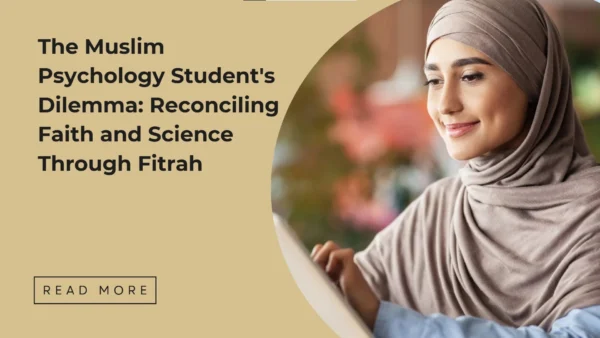
Modern psychology offers powerful tools to understand the human mind. Yet for many students, especially Muslims, studying psychology can raise deep inner questions. This inner conflict is often described as the muslim psychology students dilemma a struggle to balance academic knowledge, personal faith, and emotional wellbeing.
Many Muslim psychology students find themselves navigating Western psychological frameworks that do not always align with Islamic beliefs. Alongside academic pressure, they face questions about identity, ethics, and purpose. Understanding this dilemma is the first step toward clarity, balance, and long-term wellbeing.
Understanding the Muslim Psychology Students’ Dilemma
The muslim psychology students dilemma emerges when faith and formal education appear to be in tension. Psychology programs often rely on secular theories that explain human behavior without acknowledging spirituality or divine purpose.
For Muslim students, this can create confusion. They may ask:
- Can I study psychology without compromising my faith?
- How do I reconcile Islamic beliefs with secular theories?
- Is it possible to practice psychology through an Islamic lens?
Academic pressure, fear of ethical conflict, and lack of faith-aligned guidance intensify this struggle. Without support, students may feel isolated or spiritually disconnected.
Key Muslim Psychology Student Challenges in Modern Education
Muslim psychology student challenges are not limited to coursework. They often extend into emotional and spiritual domains.
Common challenges include:
- Curriculum gaps where Islamic perspectives on mental health are absent
- Cultural stigma around mental health within some communities
- Limited Muslim mentors in academic and clinical psychology
- Ethical concerns with therapeutic models that conflict with Islamic values
These issues can lead to stress, self-doubt, and burnout if not addressed properly.
Psychology Students from an Islamic Perspective
From an Islamic perspective, psychology is not foreign to the faith. Islam offers a rich understanding of the human psyche.
Islam describes human inner life through:
- Nafs (self or ego)
- Qalb (heart and spiritual center)
- Ruh (soul)
- Aql (intellect and reasoning)
Unlike secular psychology, Islamic psychology views mental health as a balance between spiritual, emotional, and cognitive wellbeing. This holistic view helps psychology students develop deeper empathy and ethical awareness.
A psychology students Islamic perspective allows faith and science to complement rather than contradict each other.
Student Mental Health Through an Islamic Approach
Student mental health from an Islamic approach emphasizes responsibility, balance, and purpose. Mental wellbeing is seen as an amanah (trust) from Allah.
Islam encourages:
- Emotional regulation through prayer
- Purpose through service and intention
- Healing through patience and reflection
Concepts like tawakkul (trust in Allah), sabr (patience), and shukr (gratitude) provide emotional stability during academic stress. This approach does not replace professional care but strengthens resilience and self-awareness.
Islamic Coping Strategies for Psychology Students
Faith-Based Stress Management for Muslim Students
Islamic coping strategies for students focus on grounding the mind and heart.
Effective strategies include:
- Dhikr to calm anxious thoughts
- Salah as a daily emotional reset
- Dua for clarity and strength
Time management aligned with prayer cycles helps students structure their day with intention and balance.
Muslim Student Wellbeing Tips for Academic Balance
Healthy wellbeing requires boundaries and support.
Helpful tips include:
- Setting realistic academic expectations
- Staying connected to supportive communities
- Seeking halal mentorship from faith-aligned professionals
These muslim student wellbeing tips help prevent burnout and emotional exhaustion.
Islamic Psychology Education and Career Pathways
Interest in islamic psychology education careers is growing worldwide. Students no longer need to choose between faith and profession.
Career paths include:
- Islamic counselor or therapist
- Mental health educator
- Researcher in faith-based psychology
- Community wellbeing consultant
There is increasing demand for professionals who understand both psychological science and Islamic ethics.
Islamic Psychology Career Guidance for Students
Islamic psychology career guidance helps students align their ambitions with values. Career planning becomes purposeful when rooted in ethics and service.
Students are encouraged to:
- Choose specializations aligned with Islamic morals
- Integrate faith-sensitive care into practice
- Advocate ethical mental health models
Long-term, this approach strengthens Muslim communities and improves culturally competent care.
Managing Stress the Islamic Way
Muslim student stress management in Islam focuses on acceptance without passivity.
Key principles include:
- Reframing setbacks through qadr
- Practicing self-care without guilt
- Avoiding burnout through balance
Failure is seen as a lesson, not a loss. Success is viewed as responsibility, not superiority. This mindset nurtures emotional strength and humility.
Supporting Muslim Psychology Students Holistically
Support must extend beyond the individual.
Key support systems include:
- Educational institutions offering inclusive curricula
- Families encouraging open dialogue
- Islamic counseling centers providing safe spaces
Holistic support allows students to integrate faith, learning, and wellbeing without fear or compromise.
Final Thoughts: Navigating the Dilemma with Faith and Purpose
The muslim psychology students dilemma is real and valid. Struggle does not mean weakness. It often signals growth.
By balancing ilm (knowledge) with iman (faith), students can develop clarity, confidence, and compassion. Seeking guidance is a sign of wisdom, not failure. No student should walk this path alone.
Final Call to Action
If you are a psychology student struggling with faith, stress, or identity, consider seeking faith-based counseling, mentorship, or Islamic psychology guidance in a compassionate, judgment-free environment.
FAQ Section
What Is the Muslim Psychology Students’ Dilemma?
It refers to the conflict Muslim students feel between secular psychology education and Islamic beliefs.
Can Psychology Be Studied from an Islamic Perspective?
Yes. Islamic psychology integrates faith, ethics, and modern psychological science.
What Challenges Do Muslim Psychology Students Face Most?
Curriculum gaps, ethical conflicts, lack of mentors, and mental health stigma.
How Can Muslim Students Manage Stress Islamically?
Through prayer, dhikr, tawakkul, healthy routines, and supportive communities.
What Career Options Exist in Islamic Psychology?
Counseling, education, research, community mental health, and faith-based therapy.