
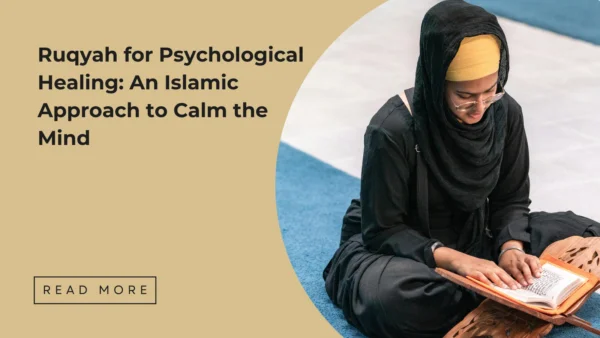
Ruqyah for psychological healing is increasingly being explored by Muslims seeking a faith-centered path to emotional balance and inner peace. In a world where anxiety, depression, and psychological dependence are becoming more common, many believers are turning back to Qur’anic healing for stability and clarity. At Sakeena Institute, we understand that true healing often requires both spiritual grounding and psychological insight.
This article explores how ruqyah spiritual healing mental health practices can support emotional well-being while remaining aligned with authentic Islamic teachings and responsible mental health care.
Ruqyah refers to the recitation of specific verses from the Qur’an and authentic supplications (duas) for protection and healing. From an Islamic perspective, ruqyah is a form of spiritual remedy rooted in tawheed (belief in the Oneness of Allah) and reliance upon Him.
When discussing ruqyah for psychological healing, we are referring to its role in addressing emotional distress such as anxiety, sadness, fear, and spiritual emptiness. Islam recognizes that the heart (qalb), mind (‘aql), and soul (ruh) are interconnected. Spiritual imbalance can affect psychological well-being-and vice versa.
Modern mental health awareness has opened conversations about trauma, emotional regulation, and stress. Ruqyah does not replace clinical care but can complement it by nurturing spiritual resilience and strengthening one’s connection with Allah.
The connection between ruqyah spiritual healing mental health practices is deeply rooted in Islamic tradition. The Qur’an describes itself as:
“A healing for what is in the hearts” (Qur’an 10:57)
Islam acknowledges emotional distress. The Prophet ﷺ experienced grief (‘huzn’) and sought comfort through prayer and remembrance. This shows that emotional pain is not a weakness of faith.
However, misconceptions exist. Some people confuse ruqyah with superstition or cultural rituals. Authentic ruqyah must:
When performed correctly, ruqyah islamic healing psychology becomes a structured spiritual practice that promotes calmness, clarity, and reliance on divine guidance.
Many individuals explore ruqyah for anxiety and depression when they feel overwhelmed by intrusive thoughts or emotional heaviness. Islamic healing psychology recognizes that spiritual practices can calm the nervous system and reduce cognitive overload.
Faith-based recitation helps:
The framework of ruqyah islamic healing psychology combines spiritual purification with cognitive awareness. When a person repeatedly reflects on Allah’s attributes-Ar-Rahman (The Most Merciful), Al-Hakeem (The Most Wise)-they begin reframing their struggles through a lens of trust rather than fear.
Psychological dependence, whether on substances, relationships, or unhealthy coping patterns, often stems from an internal void. Ruqyah encourages spiritual grounding, reducing excessive attachment to worldly sources of comfort and redirecting reliance toward Allah.
The concept of ruqyah islamic mind healing is based on the belief that the Qur’an impacts both heart and mind. Scientific research shows that rhythmic recitation and meditation-like repetition can activate calming neurological responses.
Spiritually, ruqyah works through:
Cognitive clarity increases when a person feels spiritually secure. Tawakkul plays a central role here. Trusting Allah reduces catastrophic thinking and excessive worry, creating mental stability rooted in faith rather than fear.
If someone wants to practice ruqyah steps for psychological healing, the process should be simple, authentic, and consistent.
Begin with sincere intention, asking Allah for emotional clarity and healing.
Common ruqyah verses for calm heart include:
These verses emphasize protection, divine power, and spiritual security.
Daily repetition-morning and evening-creates psychological rhythm and emotional reassurance.
It is important to avoid exaggeration or extreme claims. Ruqyah is not an instant cure but a consistent spiritual practice that supports overall ruqyah psychological well being.
One of the most balanced approaches today involves exploring ruqyah and therapy combined benefits. Mental health professionals increasingly acknowledge that spirituality strengthens coping mechanisms.
Islamic counseling often integrates:
A faith-based therapy model respects both revelation and research. Therapy addresses cognitive distortions and behavioral patterns, while ruqyah strengthens spiritual resilience.
At the middle of this journey, institutions like Sakeena Institute advocate for an integrated approach-where clinical care and Islamic spirituality work together rather than compete.
Seeking professional support does not weaken faith. Instead, it reflects wisdom and responsibility.
Consistent spiritual practice contributes to sustainable ruqyah psychological well being. Long-term benefits may include:
Regular recitation promotes calm breathing and reduces impulsive reactions.
Reliance on Allah lowers chronic stress patterns.
Faith reframes trials as opportunities for growth.
Greater mindfulness of Allah’s presence nurtures inner peace.
However, balance is essential. Severe depression, suicidal thoughts, or trauma disorders require licensed professional intervention alongside spiritual care.
It is important to differentiate between spiritual struggles and clinical disorders. Occasional sadness differs from major depressive disorder. Normal stress differs from generalized anxiety disorder.
Signs professional help is needed may include:
Ruqyah can be supportive, but it should not replace medical or psychological treatment when clinically necessary.
A balanced approach ensures both faith and mental health are protected. At Sakeena Institute, compassionate Islamic counseling provides a structured environment where spiritual guidance and evidence-based therapy are combined for holistic healing.
Ruqyah for psychological healing offers a spiritually grounded path toward emotional balance, inner peace, and strengthened faith. When practiced authentically and combined with responsible mental health care, it can support resilience, reduce anxiety, and nurture hope.
If you or a loved one is struggling with anxiety, depression, or emotional distress, know that seeking help is a sign of strength. Compassionate, faith-based counseling can guide you toward healing in a safe and supportive environment.
Learn more or seek support today at:
Sakeena Institute
Ruqyah can support emotional stability by promoting spiritual grounding and calming the mind. However, moderate to severe conditions may require professional therapy alongside spiritual practice.
Surah Al-Fatiha, Ayat-ul-Kursi, Surah Al-Ikhlas, Al-Falaq, and An-Nas are commonly recited for protection and emotional comfort.
No. Ruqyah complements therapy but should not replace professional psychological treatment when clinically needed.
Morning and evening recitation is recommended. Consistency is more important than quantity.
Ruqyah may strengthen spiritual resilience and reduce unhealthy attachments, but psychological dependence often requires structured therapy and behavioral intervention for full recovery.


We are here to guide you toward healing, peace, and understanding through the wisdom of Islam.
© 2025 Sakeena Institute (Licensed by SPC FZ). All Rights Reserved.
Struggling with your mental health? Book your private consultation with our specialists.